Showing posts with label not about dogs. Show all posts

Friday, October 09, 2026

They Can't Make A Living: Sources


Here's a short article about AVMA's economic analysis. You can get access to the full report if you are an AVMA member, or pay money for it if you aren't a member. 

This is the link to the USDA Economic Research Service report entitled "Food Animal Veterinarians and the Persistence of Rural Shortage Areas."

Finally, here is the link to an AAVMC report on veterinary school demographics. This link takes you to a PDF of the report.

Tuesday, October 06, 2026

They Can't Make A Living

 Here is a link to a short news item from a South Dakota media group about a retiring veterinarian who can’t find another veterinarian to purchase his practice. Take a minute to read it. I’ll wait.

https://www.keloland.com/keloland-com-original/parker-veterinarian-to-retire-seeks-successor/

This tale of woe is being told over and over across the U.S. Maybe you haven’t heard this exact tale, but you probably have heard that there is a “shortage” of veterinarians. This is only partially true. There is a dramatic shortage of large animal (livestock and food animal) veterinarians.

According to AVMA, for data collected in 2024, about 73% of new DVM graduates accepted positions in companion animal practices. Around 3% of new graduates accepted jobs working with food animals. New DVMs working in private practice for livestock reported starting salaries that were around $30,000 less per year than new DVMs in private practice for companion animals. Now add in the fact that the average DVM graduated in 2024 with more than $200,000 of debt.

According to AAVMC, around 3,300 DVMs graduated from vet school in the U.S. in 2025. Around 100 of them took private practice jobs working with food animals. One hundred people. Dr. Parker has a lot of competition.

Let’s take another look at Dr. Parker’s situation. He says that his practice has been listed for sale for over a year. He says that he has hosted vet students trying to find one to take over his practice but hasn’t been successful.

Maybe the overall state of the economy is making it harder for new DVMs to finance the purchase of a clinic. Anecdotally, I’ve noticed a lot of small businesses in my area that survived COVID have been closing down in the past month or so.

Maybe his 48-year-old practice doesn’t have modern equipment. New DVMs know that the gold standard medicine that is taught in many large veterinary teaching hospitals is not always easy to reproduce in the real world, but they expect basics like in-house radiography and ultrasound, not to mention a full suite of bench diagnostics to evaluate things like fecal parasites, serology, and blood chemistry and a decently stocked in-house pharmacy.

Maybe he doesn’t have enough support staff. The article doesn’t even include the word “technician.” New DVMs know that providing good veterinary medicine requires a team of trained professionals. In high-volume companion animal practices, you might see two technicians per DVM, plus other technicians assigned to cleaning, stocking, kennel management, and so forth. Plus you will have a front office staff who handles appointments and payments.

Maybe his service radius of 20 miles is too small. Maybe there aren’t enough clients. More likely, there aren’t enough clients who can afford to pay realistic fees required by a modern veterinary practice.

Maybe his willingness to be “on call 24/7 since I’ve been open” is in direct conflict with the demand of new DVMs to have a healthier work-life balance. This is a big generational shift with no easy fix.

By far, the biggest factor preventing Dr. Parker from selling his practice is money. It always comes down to money. His mixed animal practice can’t generate enough revenue for a new graduate to pay student loans, pay support staff, purchase equipment and supplies, and support a family. Few rural practices, even if they include some companion animal clients like Dr. Parker's clinic, can.

These nuances are rarely discussed. They are barely acknowledged by veterinary schools themselves. Better to claim, there’s a shortage of veterinarians so let’s pump out more! Let’s increase class size (diluting the critical hands-on aspect of learning how to practice medicine)! Let’s increase tuition (increasing the already crushing levels of debt that most DVMs have at the end of four years)!

Those aren’t solutions because they don’t address the real problems.


Friday, September 18, 2026

Dante

 I've written here and there about how much time and energy (mental and physical) that we spend on incineration. It is an unlovely but super important part of running a veterinary pathology unit. Once we are finished with our tests, we of course allow for remains of smaller animals to be handed over to a private cremation company so the ashes can be returned to their owners. But there is still a lot of material that has to be handled here on site. Last year we incinerated 66,500 pounds, going through more than 6,000 gallons of propane in the process. 

Because the diagnostic laboratory is part of the state Department of Agriculture, we are regularly asked by colleagues and other state agencies to incinerate things for them. Don't get wound up here, those requests involve contraband food and plants for the most part. But we also incinerate flocks of backyard poultry that are depopulated because they are infected with HPAI (the depopulations are handled by another agency in the department). Last year we also incinerated a few dozen pigs that were euthanized because they were infected with brucellosis. 

We got a new incinerator in the fall of 2024. The old unit was woefully underpowered for even our small lab, and we managed to literally burn it up. Not like flames shooting out the top but we ran it way outside its designed parameters until everything failed. The new unit is magnificent. The loading door opens with hydraulics. There is a scoop bucket (like on a front loader), also on hydraulics, that drops the load into the lower chamber. We had a few hiccups in the first few months of operation, like discovering that the lower chamber ran so hot that it expanded the fluid in the hydraulic arms, pushing the loading lid open a centimeter or so during burns. This let in too much oxygen and really messed with efficiency. The manufacturer came out and installed two custom-welded clamps on the lid. Problem solved!

Of course I keep insanely detailed records of usage and performance. I shared that with the manufacturer and they were over the moon--they build and test their units, and of course they visit their clients for repairs and annual preventative maintenance, but they rarely get such a detailed look at performance over such a long period of time. 

I named the new incinerator Dante. Here he is in operation. The small door covers a portal into which we insert long tools that we use to stoke the load during a burn (basically, move the material around). At the time this picture was taken, the lower chamber was around 1680F. 


Being a veterinary pathologist in a small state diagnostic lab involves a lot more than just doing necropsies. I also have to be an engineer/electrician/physicist to stay on top of how Dante works and how to troubleshoot problems.


Thursday, September 10, 2026

Countdown


I put a countdown timer app on my phone to track how far out I am from retirement. It has a cute little widget that I check every day. Sometimes more than once. Fewer than 600 days to go. That’s not even 2 years.

The grant that pays towards my student loans runs to the end of 2027. It would be incredibly dumb to leave guaranteed money on the table. I will still have a bit of loan debt after the grant ends but I should be able to wrap that up in two or three years. The Odyssey will be paid off by then so I can divert that money to the student loan. Easy peasy.

Why not retire on December 31, 2027? I turn 65 the following spring. Waiting until just after that makes retiring from the state government job a bit easier since it is a “standard” retirement target.

Making this decision has already affected my mindset at work. When I get dragged into administrative situations that are dumb or annoying or make my job harder, which is pretty much all of them, I remind myself that in fewer than 600 days, those things won’t be my problem anymore.

Of course, I feel a bit guilty because my departure will be extremely inconvenient for my team and for the lab. There is a significant programmatic change coming to the lab in the fall of 2029 or thereabouts. I am deeply involved in planning and preparing for this change. It relies quite a bit on me and my expertise. Only I know that I won’t be here to see it happen.

I keep reminding myself, I cannot have more loyalty to my employer than it has for me. And believe me, as an employee of a deep red state government agency, my employer has no loyalty to me whatsoever.

Just checked the widget. Yep, fewer than 600 days.

Wednesday, May 13, 2026

Sample Wall of Shame

Under the umbrella of Pathology, the lab section that I supervise has two main functions: necropsy and histopathology.

Histopathology refers to both the study of disease in tissues and the process of preparing tissue samples so they can be examined under a microscope. Tissue samples are systematically collected during necropsies. Histopathology is one of the many tools we use to help determine the cause of death of an animal. Veterinarians (and doctors) also remove tissues during surgical biopsies and submit those for histopathology. In those cases, we are not necessarily looking for the cause of death but examining the tissues to determine if cancer is present, or to identify the cause of a persistent lesion or disease state in the animal.

Tissues slated for histopathological analysis must first be fixed. The most common fixative is formalin, an aqueous solution of formaldehyde. Formalin causes cross-links to form between proteins and makes tissues stiff. Formalin-fixed tissues don’t decay (they can degrade over time, but we will let this oversimplification go). Once the tissues are stiff, they can be cut into very thin slices and placed on microscope slides. The rule of thumb for proper fixation of a tissue sample is a 10:1 ratio of formalin to tissue.

But this post isn’t about what goes on in a histopathology lab. It’s about the containers that veterinarians choose to hold tissue samples and formalin that they then ship to us. I keep pictures of the more creative choices in a folder that I labeled “Sample Wall of Shame.” Here are some of the best. 


This container is for food, human food.


So is this one. It was sealed with packing tape and formalin leaked out during transport.


This vet submitted the uterus of a dog in a Gold Peak tea bottle. When collected at the time of surgery, the tissue undoubtedly went into the bottle easily. We had to cut the bottle apart to get the fixed tissue out. And yes, that is a zip tie that was used to close off part of the uterus. We still don’t know why.


This vet chose a pill bottle which does not have a liquid-proof seal. They thoughtfully folded the submission form into the same baggie as the pill bottle. Formalin leaked onto the submission form.


This vet chose a glass mason jar and opted to seal it with packing tape instead of wax film. Glass is an insanely terrible choice. And the submitter still didn’t have enough formalin for the size of the sample.


This vet used an appropriately sized, commercially prepared jar with sufficient formalin to fix the submitted tissue samples. They had marked one of the samples with a suture, a common way to differentiate multiple samples placed into one jar. Unfortunately, the suture caught in the threads when the jar was closed and most of the formalin leaked out during transport, contaminating other samples in the same shipping box.


There was not enough formalin in this commercially prepared jar for this large tissue sample. 


Why does any of this matter? Formalin can leak out of poorly sealed containers and contaminate submission forms, packing materials, and other samples in the same shipping box. Leaks expose shipping, receiving, and histopathology personnel to formalin, a carcinogen. Tissues that don't get fixed completely can rot, obscuring diagnostic details. Glass containers can break, creating sharps hazards. 

Sure, the commercially prepared jars that I showed in the last two examples cost money and some vets may want to cut costs where they can. But selecting any old container that comes to hand creates unnecessary risks, potentially ruins samples, and shows poor attention to detail and poor understanding of the requested diagnostic test. 

To be sure, this is not a problem unique to our lab. All diagnostic labs have to deal with improperly packaged samples. We wear PPE and use biological safety cabinets and fume hoods to handle samples to mitigate risks on our end. And of course we educate clients who submit samples like this as often as we can. 

Even so, I regularly add photos to my Sample Wall of Shame folder. 


Thursday, April 16, 2026

DNF

 When I was much younger, it bothered me when I was unable to finish a book. It felt like a mixture of disrespect to the author and laziness on my part. And after a certain point, the sunk cost fallacy would kick in and I’d think, I’ve made it this far, might as well finish it. Not anymore! These days, my patience is tissue-thin, and I will drop a book in just the first few pages if I am not enjoying it.

My three biggest reasons for not finishing a book are poor (or absent) editing, YA fantasy that wasn’t marked as YA, and sloppily researched, key plot points, usually involving a subject that I know something about.

Why no YA fantasy? I am an adult woman. I don’t want to read a story targeting hormonal 12-year-olds.

The best example of sloppy technical research is anything churned out by Frieda McFadden. Even the laziest writer can read a Wikipedia article to find out some basic facts about how trains or credit cards or grocery stores work, for example. God help us when she veers into medical-adjacent plot points. Sheer nonsense. Was she trying for fantasy on top of the psychological mystery angle? She, and her readers, apparently don’t care. Count me out.

I recently added a fourth reason for DNF: florid, overblown writing. I don’t encounter this very often because I don’t read genres that tend to the florid.

I had already passed over a new biography about Hedy Lamarr several times. Although “The Only Woman in the Room” seemed to be an intriguing story, I never could get hooked enough to check it out. But I’ve got several holds pending at the library and I decided to fill the gap last week with this book since it was available.

I was horribly disappointed. I couldn’t make it past 20 pages. It seemed to have been written using an algorithm that specified that every noun had to have one or more adjectives and every verb one or more adverbs. It was ponderous. Adding insult to injury, verb choices were always the most complicated possible. No “she said” for this author. It would be “she breathily intoned” or some other tortured word choice. Even more insulting, key points were repeatedly repeated. I don’t want to be hectored when I am trying to escape into a story (looking at you too, Louise Penny).

I can’t believe that people read this and thought, wow, such a good book. The fact that it was on the NYT Best Seller List means nothing since those rankings are easily manipulated. This book was so overdone that I am not sure if humans were involved in its writing or editing. Either way, it was DNF for this human.


Friday, March 13, 2026

Moving On

I really enjoy my job. I get to see an amazing array of animals and diseases. I am constantly learning new things. The lab’s clients are interesting and entertaining. It’s a work in progress, but I think that the lab section that I supervise is running pretty smoothly. 

But this job doesn't define me entirely. As much as I look forward to coming in to the lab each morning, I don't live to work.  

The stress points of this job have changed over the years I’ve been here. The old incinerator was a huge source of drama and stress. We got a new unit in the fall of 2024 but the hoped-for reduction in drama and stress didn’t show up right away. There were significant operational growing pains and I was still spending entire days and even weeks on the phone with the manufacturer trying to diagnose problems. I performed many of the repairs myself. But things finally settled down with that.

In the past year or so, an entirely new source of stress has popped up. Arkansas currently doesn’t have a school of veterinary medicine, but by this fall, it might have two! Arkansas State University in Jonesboro is nearing the end of the approval process with the AVMA and hopes to start their program this fall. The other school is associated with Lyon College. This private school of vet med is being backed by venture capital. Neither school is building a teaching hospital. They are using a distributed model in which third- and fourth-year students complete required rotations in private clinics and at other vet schools. Both ASU and LC want to send students to my lab for necropsy training.

Our lab is old and small and resources are limited. ASU is being reasonable and has agreed to send no more than 40 students through our lab each year. That is a lot but it should be manageable. Lyon College is not being reasonable. They want us, that is, me, to deliver necropsy training to entire cohorts.

Putting aside the fact that the mission of the lab does not include teaching, the fact that I’m only one person, the fact that we literally don’t have enough space to have that many more people in necropsy, there’s the issue of Lyon College itself.

Lyon College will have few entrance requirements beyond the student’s ability to pay. The VC funding behind the new school is focused on profit, and the losers in that scenario are the students. The dean they hired has a particularly unsavory past. I’ve repeatedly expressed my concerns about the lack of space and resources as well as my reluctance to partner with Lyon College in general. I’ve been told that this partnership will happen no matter what.

The people making that decision are not factoring in one very important variable. I have a choice. And I’m choosing to retire far sooner than I would have if they had not forced Lyon College on me. I will be out before the first students from either ASU or LC come to the lab.

I met with my financial advisor yesterday. He assured me that my portfolio can accommodate this change. We had a great in-depth discussion about my options. He’s good at his job and has really listened to me. I’m already making plans!


Tuesday, December 30, 2025

Reminder

 Locum work, also called relief work, has always been a thing in both the human and veterinary medicine fields. Oddly, it seems like it's mostly nurses from the human side who do locum work, while it is DVMs who travel around in vet med. When the world turned upside down during COVID-19, locum work really took off to the point where it has become a solid career option for some veterinarians. 

Some assignments can last for months, such as covering maternity leave for a regular employee, while others consist of an occasional overnight or weekend shift. Some practitioners use locum work to travel widely, while others stick closer to home. There are companies who will find locum assignments for you (for a fee usually), or you can arrange them yourself through personal connections. 

Locum work can pay really well. DVMs covering overnights at an emergency clinic can earn over $1500 for a 12-hour shift. That's a car or student loan payment or money saved for a trip. You can be paid as a regular W-2 employee or as a 1099 contractor, which is a bit more complicated for tax reporting. You have to arrange DEA licenses for each location that you work at. And if you travel, you'll need a license to practice in each state. All of that is just bookkeeping. Quite manageable. 

Locum work isn't for everyone. It takes a certain personality and ability to walk into a strange clinic with pre-existing technical protocols and interpersonal drama and get right to work treating patients. To add to the stress, a DVM, locum or otherwise, is expected to be a team leader. It doesn't matter if you don't know where the bathroom is. A relief practitioner needs to both check their ego and take the lead. 

I've started picking up Saturday shifts at a local clinic. I only do one shift per month, and sometimes skip a month. The clinic is corporate, meaning it is owned by a much larger company, so I was hired as an hourly employee with W-2 wage and tax reporting. 

Why would I do this when I have a perfectly good job? There are lots of reasons! For starters, when I pick up a Saturday shift, one of the regular vets gets to spend that day with their family. Burn out is a problem in vet med. I'm helping out my colleagues.

While that sounds terribly noble, there is also a selfish reason that I'm doing it. I get to put my hands on living animals. I get to practice medicine. I absolutely thrive as a veterinary pathologist and am good at it, but working a Saturday in the clinic reminds me why I spent all that time and money getting the DVM degree. 

Because of the many bad habits I've picked up from being a pathologist, I told this clinic that I would absolutely not do surgeries, dentals, or even laceration or wound repair. I would only take wellness clients. I would be okay with giving vaccines, but no other sharp things should be put in my hand, ever. And they are fine with that! 

I see between 14 and 18 clients per shift, which is a lot. Each time I do a relief shift, my hands and brain remember physical exam skills that I learned in school but haven't had a chance to use since I graduated. Sure, we do physical exams before a necropsy but we are evaluating very different things about the animal in front of us.

 The owners I work with are in a different place too. They are bringing their pets in for wellness exams, vaccines, parasite preventatives, nail trims. Simple stuff. Basic health care. For the most part, they are relaxed and calm. It's a different world.  

There's another reason I'm doing this. I've already started to think about retirement from my current job. I'm still a couple of years out but now is the time to start planning. By keeping my skills up and my connections solid, I can step from my current job into part-time relief work without a break. I am grateful that I have that option. 


Friday, October 10, 2025

Wall

 My backyard is quite steep, the soil is poor, thin, and rocky, and there are lots of mature oak and walnut trees. Erosion is a problem and I’ve been experimenting with different ways to manage it. I don’t want to put down sod because I don’t want to waste water on it or deal with the tons of chemicals it would need to remain alive on the aforementioned shitty soil. Clover does okay in some spots. It dies back in the summer but the roots remain and they help hold things in place. Throwing clover seed around isn’t going to solve the erosion issue however.

The biggest drainage problems are in the two farthest corners of my yard. After watching dirt pile up against the fence in those corners, I needed to get serious about fixing the problem this year.

I decided to build a retaining wall using those 22 lb paver blocks. Going into the project, I wasn’t sure I could do it. Conceptually, building a retaining wall with pavers isn’t hard. But there were complicating factors for this particular wall.

This was my first attempt at such a project, and of course I chose an area where I had to step up the bottom course FIVE TIMES to accommodate the natural change in elevation. It also took more blocks and paver base than I expected. 


Since I wasn’t ready to commit to an entire pallet of blocks, I got 18 blocks at a time from Home Depot. Because they are heavy, I could only move 4 at a time in the wheelbarrow. And because my yard is so steep and there are other barriers in place, I had to navigate half a dozen switchbacks for each trip. It took me an hour to move 18 blocks from driveway to the job site.

I teach dog classes on Sundays, so I could only work on the wall on Saturdays. Like most normal people, I have other stuff I also need to do on the weekends so I really could only work on the wall for a few hours each Saturday morning. It took 5 weeks to build it, including 6 hours to dig the initial trench. 


Is it perfect? Of course not. It’s not even all the same color because Home Depot ran out of grey blocks and I had to finish the wall with tan ones. But it’s reasonably level. I managed to work out the step-up process after a couple of false starts. And I did it all myself. 


Friday, September 05, 2025

Up Close And Personal With The Anaerobes

Earlier this week we had a cow on the necropsy table. Various factors, including the fact that we have to incinerate during the day and the long holiday weekend, resulted in this cow being in our walk-in cooler for 6 days before we could get to her. The owner had dropped her off with another cow. I tried to talk him out of bringing two but he insisted. So now I had to do a necropsy on a rotten cow that was going to have zero diagnostic utility. 

A few minutes into it, I stabbed my arm with a very sharp, very contaminated knife. The wound was not large, and we quickly cleaned it with alcohol and slapped some antibiotic ointment and a bandaid on it. But as the day progressed, things began to head south. The area around the wound became firm, hot, had a faint purple tinge, and was welting up. It hurt to move my arm. Even brushing my arm against my shirt was quite painful. By early evening, with this progression of clinical signs, I realized that this was not a routine nick.

Off to urgent care I went. Once I went through the progression of clinical signs and emphasized "clostridium," the staff jumped into action. 

Because of a high risk of exposure to tetanus as a veterinarian in general and as a pathologist in the specific, I get boosters every 5 years. The last one was in 2020, so I was due anyway. Yes, tetanus booster please. 

Then they came in with the antibiotics, a broad spectrum cephalosporin. This one goes IM in the bum and it stings like crazy. I'm writing this more than 2 days after I got this shot and it still stings. 

It took two good nights of sleep and patience, but the miracle of pharmaceuticals knocked that nasty infection down. I have a healing nick in my skin and some bruising (that kind of acute inflammation causes a fair bit of collateral tissue damage), and a sore bum. But I will be fine.

In hindsight, I should have headed to urgent care much sooner, and I will chalk that up to a lesson learned. 

I am grateful that I have a job that provides decent insurance. I am grateful that I have access to health care for acute, emergent problems like this. I am grateful to the NPs at the urgent care who responded quickly and professionally even though it was the end of a long day for them. I am grateful that tetanus vaccines still exist (since I expect vaccines to become unavailable/hard to find/not covered by insurance in the coming months to years, I got measles and shingles vaccinations earlier this year). I mention these things because they are now in jeopardy for many citizens of this country. I'm worried. 


Friday, August 15, 2025

More Than You Ever Wanted To Know About Intestinal Parasites in Small Ruminants

 Whenever we have a small ruminant (sheep or goat) necropsy, the rule of thumb is that it is intestinal parasitism until proven otherwise. 

Cows get intestinal parasites too, but for the most part, due to differences in management and physiology, weaned animals and adults rarely develop such a heavy parasite load that it leads to death. There are always exception, especially for calves that are still nursing.

Sheep and goats have a particular problem with the roundworm Haemonchus contortus. The adult worms are small, around 1 cm long tops, and very thin. In small numbers, they are easy to miss. Haemonchus prefer to take up residence in the abomasum, the glandular part of the forestomach between the rumen and the duodenum. The adult worms and late-stage larvae burrow into the mucosa of the abomasum and feed on the blood of the animals. Heavy or even moderate but chronic loads of Haemonchus cause the animals to become anemic. When the animals begin to show clinical signs of the anemia, the owners deworm them but it's usually too late. Severe anemia secondary to Haemonchus parasitism is the cause of death of most of the sheep and goats that we see. 

 Coccidiosis is the other player in this small ruminant gut roulette. Coccidia are protozoal parasites, not worms. Infections have to be treated with entirely different products. For most of their lifecycle, coccidia are tucked deep into the intestinal mucosa. The result is erosion of the structure of the mucosal layer. The animals can't digest food anymore and often develop diarrhea, which is not usually observed in cases where only Haemonchus is present. But severe coccidiosis can also cause anemia! 

Many sheep and goat owners are small flock hobby farmers. They don't have a lot of space and can't rotate pastures. The animals shed ova and oocytes in their feces and repeatedly re-infect each other. Some of the owners decide the solution is to treat their animals constantly with dewormers and coccidiostats. The result is a short-term drop in adult parasites. But the treatments do nothing about ova and oocysts in the pastures. They are highly resistant to heat, cold, UV, etc. and sporulate into larvae to start the cycle anew. And overtreatment can result in the creation of drug-resistant populations of parasites. 

 One of the tests we try to run on every small ruminant necropsy is a fecal egg count. The result of this test is a count of ova or oocytes per gram of feces. Here is a graph showing the results of 47 fecal egg count tests during a two-year period. The left hand scale is a log scale, so each horizontal line increases by a factor of 10. Coccidia are Eimeria spp. and strongyles (strongyloids) are for the most part Haemonchus. Some animals only had Haemonchus, some only Eimeria. Some had both (the paired lines). Most of the animals represented here were severely anemic. 


The winner is the lamb necropsied by my colleague that had more than one million Eimeria oocytes per gram of feces. Truly astonishing. 

 Today I necropsied a lamb that wasn't anemic. No adult Haemonchus were in its abomasum. The general presentation of the lamb was consistent with sepsis, and while that was the cause of death, that's not a proximal diagnosis. What caused the sepsis? I kept looking. The animal had severe diarrhea and there was no digesta in its intestinal tract or feces in its colon. Nothing but gas. I started looking into the large bowel and found many adult roundworms. They weren't delicate, hair-thin Haemonchus but they were definitely strongyloids. The mucosa of the large bowel sections was eroded and irregular. Then I moved up to the small intestine. Surprise! Tapeworms. Adult tapeworms that were many, many inches long. 

Since we don't see intestinal worms very often in sheep and goats, I did a little research and decided that the worms were probably Trichostrongylus spp. They can also cause anemia like their cousin Haemonchus but they live in the intestines instead of the abomasum. Since I didn't see evidence of anemia, I thought that the tapeworms were probably the more significant problem. 

And the cause of the sepsis? Well, it's a cascade of unfortunate events. The intestinal mucosa is damaged by worms and larvae cavorting about. The tapeworms consume digesta (competing with the lamb for nutrients). The intestines stop functioning and no longer send proper signals to the rumen, which stops trying to send stuff into the intestines. Eventually, the intestinal environment becomes so compromised that gut bacteria decamp into the bloodstream. 

What had me scratching my head with the case was the fact that tapeworms are extremely easy to treat. We usually only see them in small animal cases associated with neglect and rarely in production animals. That problem was resolved when I called the owner and she told me that they hadn't dewormed ... in years. 

It's not a problem until it is, I suppose. She's now lost 6 lambs due to that decision. 


Friday, May 02, 2025

Occupational Hazards: Ballet With Knives

 Working in veterinary medicine comes with special occupational hazards. Like clinical vet med teams, the pathology team is regularly exposed to the usual array of body fluids. Our working environment is probably a bit more splashy than a typical GP office, however. I always wear a surgical cap to cover my hair when I'm on the necropsy floor.

Let's add in exposure to ticks, fleas, flies, fly larvae, beetles, ants, and other members of team arthropod. Except for the ticks, most of them don't have much interest in us. Many animal ectoparasites are evolved for just a few species. But not ticks, of course not, those little generalist fuckers. 

There is the potential for exposure to some fairly nasty zoonotic pathogens, including rabies. We are vaccinated for rabies and the lab checks our titers every couple of years. We mitigate risk by wearing PPE. When needed, we work with suspect tissues inside a biological safety cabinet. Knowing what pathogens might be differentials in a given case before we handle an animal is important too. That comes from training and experience. I always take the reptile necropsy cases because I find their anatomy and pathologies really interesting. But they can have some weird bacterial diseases that can make people pretty sick. 

An extra special hazard is exposure to intestinal gases. This isn't much of a problem for small animals, but large animals like horses and cows can become pretty bloated after they die. A couple of years ago, I accidentally pierced the rumen of a cow while leaning over the carcass and got a blast of moist, bacteria-laden rumen gas directly in my face. I said, uh oh. Forty eight hours later, I dragged myself into an urgent care with a raging case of conjunctivitis. They loved the backstory though!

Other hazards that are common to pathology are being cut with sharp things, including knives, scalpels, claws, and cut bone; slipping; being rammed by rolling tables; and being whacked in the head by the hoist hook or a flying hoof when a large animal carcass unexpectedly rolls or slips.

Of course there is the potential for sharp things and slippery stuff on the floor in an operating theater, but it's a matter of degree for the pathology team. We might have five people armed at the same time with wickedly sharp knives moving about in a relatively constricted space. And we are performing our ballet with knives ankle-deep in intestinal contents and blood. 

Communication is essential. We can't go waving knives and scalpels about willy-nilly. It's essential to know where everyone's fingers are before you start cutting something. Planning is part of our ballet too. We need to be systematic about how we conduct necropsies and how we handle animal remains. To the external observer, it may look chaotic but we don't rip open carcasses in a random fashion. 

I'm proud to work with a professional, efficient team that is conscious of safety, looks after each other, and gets the job done with a minimum of drama. 


Sunday, April 20, 2025

Home Improvement--Making Progress

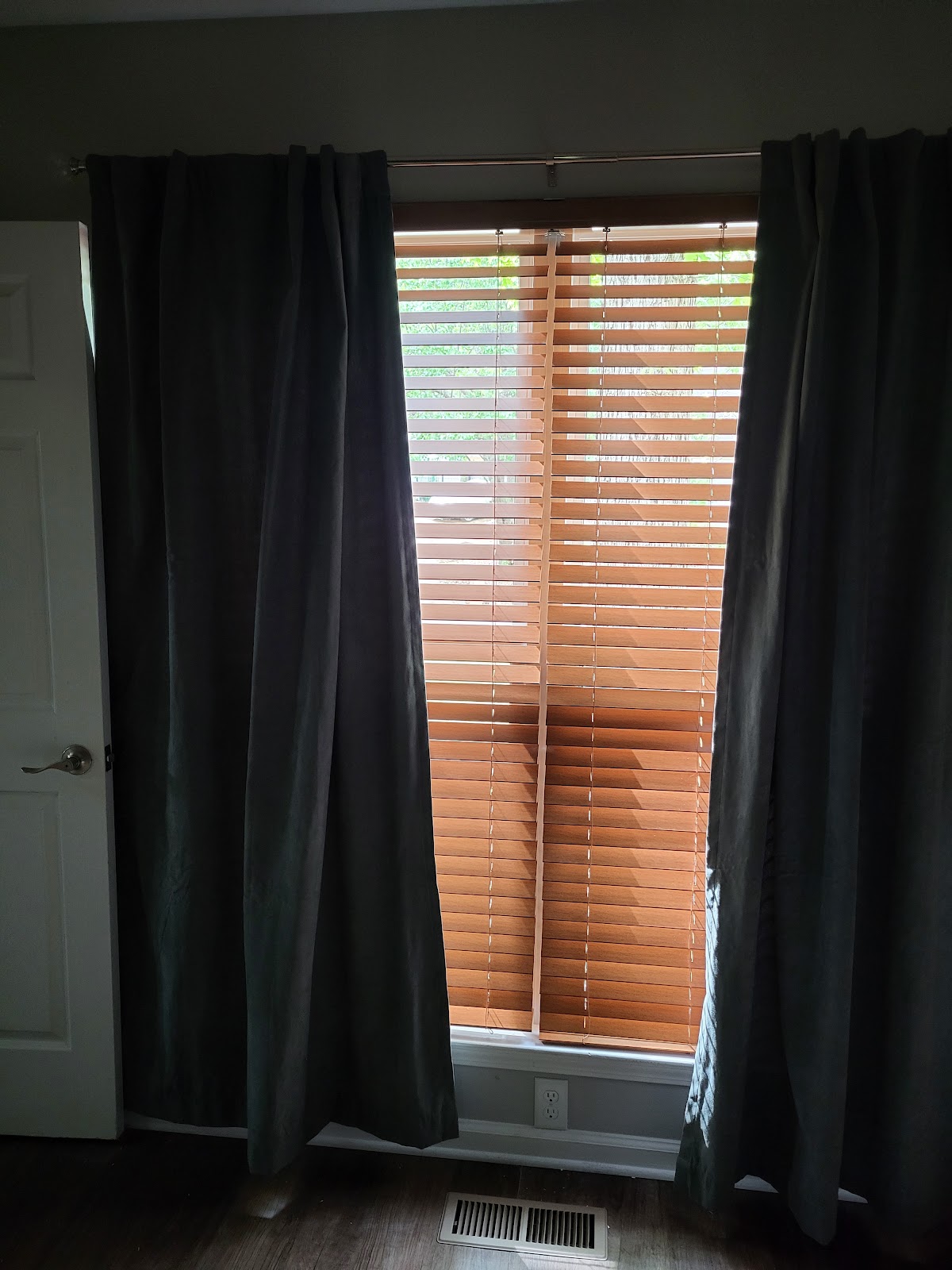
 Installing the new blinds has turned out to be quite a chore. I'm taking my time to make sure I don't damage the walls or the blinds. Drilling holes makes a mess that has to be cleaned up. I could have paid someone to put the blinds up but decided to do it myself. Of the 11 windows with blinds, I still have 4 to go.

 I got one of the big double sets done yesterday. These windows are on the front of the house and get strong afternoon sun so they also have curtains. 


Here's the upstairs bathroom.


My house sits on a high spot and the backyard slopes down away from the house so the upstairs windows, all of which are on the sides or back of the house, look out on trees. I think the blinds add warmth and color. The faux wood has a bit of texture which complements the trees. 

Tree pollen season is winding down and the rain predicted for later next week should finish that off. Once all the blinds are up, I will go back and clean all of the windows one more time. Then it's on to the next job!


Sunday, March 30, 2025

Home Improvement

Despite the traveling I do to attend agility trials, and all of the teaching I do on the weekends, I'm basically a house mouse. I prefer the food that I cook myself and I rarely eat out (1 or 2 times a year). I don't like leaving the house once I'm home for the day. I work on lists of supplies and food that I need, usually only going out once or twice a month to restock or get things for home projects. I feed my sock and shoe fetish entirely online (Darn Tough Vermont and Altra are the only socks and shoes that I wear both to work and to agility, and I have way more pairs of them than I am going to admit to here). 

My job is stressful on many levels--physical, intellectual, emotional. Agility is a passion and is fraught with emotional and physical investment too. My house is the place where I can hang out and recharge. Where I can do what I want when I want. 

The house I'm in now was refurbed by flippers, and not very well. They made cosmetic upgrades but left a lot of important infrastructure untouched. I knew the house was horribly inefficient with its 30-year-old water heater, HVAC, blinds, windows, etc. The flippers put in cheap laminate flooring downstairs and cheap carpet upstairs, and cheap doors to the front of the house and from kitchen to garage. I decided to just live in the space for a while before I made any big changes. That "awhile" turned into years but at last the need for changes was forced on me.

I had the deck replaced two winters ago. It had become a bit of a crisis as I was falling through the rotting boards when I walked out there. As a large section of it is 15 feet off the ground, this was a serious safety issue that needed to be fixed quickly.

The water heater developed a leak this fall. Not a surprise. It worked for decades beyond its original expiration date. I had it replaced. I called an HVAC company out to do a winter check on my unit. They found some serious damage due to ... failed past repairs? Animals? Gremlins? I had it replaced.

And I finally got tired of looking at the hideous aluminum-framed windows that couldn't be opened, with trails of mold around the edges that no caulk could hide, and condensation between the panes due to long-failed seals. I had every window in the house replaced. Sounds so simple to type it out but it was a massive job.

Not that I replaced the windows myself. Hell no. I got three bids, did my research. I paid someone to do it. It took two and a half days, which is really fast from one perspective but an eternity when I had to take time off from work and be here all of that time. 

I also had them replace the stupid fucking French doors from the kitchen to the deck. French doors look nice until you actually have to live in a house with them. Can't put a screen on the darned things. The locking mechanism of one was broken and I could only open one of the doors. They leaked water around the bottom. They never sealed well and cold air whistled in around them, despite the Frankenstein monster layers of sticky-backed rubber seals I kept adding around them. And when I had the window company come out to measure for the windows and the new sliding glass door, they pulled off the trim and we discovered there was literally 3 inches of open, unfilled space on either side of the doors. Just air and a thin layer of siding between that trim and the outdoor world. No wonder the kitchen was so hot in summer and cold in winter. There was no insulation at all around the damned things.

I went with vinyl windows, of course. Not double hung because that's a marketing gimmick. The lower panes in the single hung windows still rotate into the room and can even be removed if needed. The basic functionality is still there. The difference in price between single hung and double hung windows was the cost of my lovely new sliding glass door. 

After the installers were gone, I spent hours (my entire Saturday) cleaning the floors and putting the furniture and carpets back in place. I still need to clean up the window frames here and there. There's still plenty of dust and vinyl curls to wipe up inside and nails and pieces of caulk and glass to pick up outside. 

But the windows are so nice. I came home today after 7 hours outside teaching and training at the club to a cool, quiet den. Ahh.

But these projects never really end, do they? As they were installing the new windows, I realized that I couldn't put the horrible 30-year-old blinds back up. I just couldn't do it. So I measured everything and ran to Home Depot to order nice faux wood blinds in a warm maple color. Too bad I didn't realize this two weeks ago. But I can limp along with temporary window coverings until the new blinds come in. Deliver to the store for free? Why yes, I can pick them up. I'm still debating whether I will put the blinds up myself or pay someone else to do it. I took all the old blinds to Habitat for Humanity ReStore.

I'm fortunate that I can afford to replace these important parts of my home when I need to. The dogs and I will benefit from a cleaner, quieter, more comfortable living space. 


Wednesday, March 19, 2025

Bah! Humbug!

 I don't celebrate holidays. I don't put up decorations or make special food. I don't wear costumes or specially colored or bedazzled clothing. I don't do gift exchanges. I'm not a monster. If invited to a friend's house for a shared meal on a designated holiday, I go, eat, and be appropriately merry. I just don't do anything for holidays on my own.

I don't celebrate birthdays either. I don't buy the dogs special toys or give them special treats. If I want something for myself, I save up money and buy it when I am ready. I don't need to wait for a special day for that.  

In vet school, my classmates had an annoying habit of singing "Happy Birthday" whenever they found out it was someone's birthday. For four years, I lied and told them my birthday was January 1. I chose that day because it reliably fell during the holiday break, so there were no classes, thus avoiding the matter entirely. 

For most holidays, I waver between anger at the false veneer of religion that is slapped on as if that was sufficient excuse, dismay at the empty commercialism, and just not seeing the point. 

Don't get me wrong. I'm happy to have paid holidays from work. I'm like my job but I have plenty of things to keep me occupied when not at work. It would be nice to choose which Monday or Friday I can take off in, say, June, rather than being told, it's this one day. But that's hardly a substantial complaint.

I think that hyping up events that "must" happen on a specific day ends up excluding too many people. In this hyping, the same events are deemed lesser or meaningless if they happen on any other day. People are pressured to participate by peers, family, and corporate overlords. Maybe they can't afford decorations or special food or themed clothing. Maybe they have to work that day. Maybe they aren't Christian. I can't drum up much positive feeling as a result.

Still, I don't make a crusade out of crushing holiday cheer. I just opt out. 


Saturday, March 15, 2025

Immunity

I had been thinking about getting some of the recommended old people vaccines for a year or so now. The alarming chaos that the Trump administration is creating accelerated those decisions. I'm really worried that some of the vaccines won't even be available in a year or two. 

 As an aside, with no research being done in the U.S. to pin down the strain of this fall's influenza virus, and avian influenza misbehaving all over the place, we are going to be royally fucked anyway. 

As another aside, I absolutely trust science. Vaccines have saved millions of lives across the globe for decades. Dismissing vaccines as a public health necessity clearly shows how little you value those lives. Notice I said I don't "believe" in science. Science doesn't require faith or belief. 

Back to those old people vaccines. I decided to start with the shingles vax. A friend went through about 8 weeks of painful hell when she developed shingles. She couldn't lift one of her arms above her waist for weeks. I'm busy at work, busy with teaching dog classes, busy with my dogs--I don't want to sit out 8 weeks of any of that. 

 My local Kroger offers a wide array of vaccines on a walk-in basis. I got a COVID booster and my influenza shot there last fall. Since I get a couple of minor medications from that Kroger pharmacy, all my info is in the system. I walk in, say "I want this vaccine" and in minutes it is done. My insurance covers 100% of the cost. It is so stupidly easy to take care of this. 

I knew the shingles vaccine required two shots. I was surprised to learn that the second shot isn't given until at least 2 months from the first. That's a long time to wait for the second booster. But the chickenpox virus is a weird one anyway. 

As usual, I got my shot in my right arm. I'm one of the special 10% of the world that is left-handed. 

 That was three days ago. That shot spanked me hard. 

It took a solid 24 hours before my immune system decided to kick into gear, but I have a low-grade fever, raised, red wheals on my arm extending 2-3 cm around the injection site, sore arm, malaise, etc. None of these are adverse events as they are an expected response to the shot. But that is one spicy vaccine! Yikes!

But all of these things are so much less horrible than actually getting shingles. 

Measles booster is coming up next month! I can't wait!

Tuesday, January 30, 2024

New, and New To Me

 I bought a new car this summer. It wasn't just new to me, it was actually new, with all of 12 miles on the odometer.

On a whim, on a hot summer day in July, I decided to stop by the local Honda dealer located near my house after lunch. I'd been thinking about getting a new car. I had been researching EVs for months but wasn't finding anything that met my driving needs. But I thought, maybe I can downsize and get a smaller SUV instead of the Odyssey. 

I gave a Pilot a quick test drive and hated it. Light, bouncy. And not nearly enough cargo space.

I love my Odyssey van. I can easily haul three dogs and the mountain of crap that we need to comfortably survive in a hotel and at an agility trial. I can fit 8 foot long pieces of PVC in it. I can sleep in it if I have to (and I did during the move from Oregon to Arkansas). The Odyssey just works for me.

I bought my first Odyssey lightly used. It was still relatively low mileage but I wanted a newer car with updated safety features that the old one lacked. 

The dealer had two Odysseys on the lot, a white one (hated it) and a lovely slate blue one. I looked at the salesman and said, I'll take the blue one. No test drive needed. I know what I'm getting. It's not sexy or cool, but it is exactly the kind of car that I want.

A couple of hours and a lot of paperwork later, I was transferring dog crates and assorted gear from the old Odyssey to the new one. I felt strangely emotional--I was losing an old reliable, well, I can't say a car is a friend, but it was a reliable tool that I used every day. A tool that had transported me back and forth across the country to both coasts more than once. I was sad to say goodbye to the old van. But I drive Hondas for a reason: I immediately felt at home in the new van with its nice leather interior and spiffy safety features.


Thursday, August 31, 2023

It's All About Meeeee.....

 In the past few weeks, I've read four biographies. I don't read biographies often but they caught my eye as I was scrolling through Central Arkansas Library's online offerings. Boy, what a mixed, and rather disappointing, bag!

The first was Page Boy by Elliott Page, the transgender actor. I enjoyed his work in the movies Juno and Whip It. I was looking forward to reading some Hollywood gossip and learning more about him. Sadly, about halfway through, I found myself skimming page after page, hoping an end was in sight. I became emotionally exhausted simply reading about his extreme lack of self-confidence and self-awareness. I can't imagine how much more exhausting he would be in person. If you have to repeatedly ask people around you the same question, over and over, for YEARS, then you should probably find a new therapist.

Next up was Spare by Prince Harry. I really wanted to have some sympathy for Harry and Meghan, since it was pretty clear she had been unfairly hounded by the British press and treated with extraordinary disdain and unconcealed racism by members of the royal family. Plus there was that bit about his mother dying so tragically young, apparently also hounded by the press. But in recounting episode after episode of his childhood and youth, it became clear that Harry was writing from a place of incredible privilege and wealth while remaining utterly tone-deaf to that privilege. Jetting off to Africa whenever you get your feelings hurt is not an experience most of us will ever have. By the end, my sympathy had drained away.

I followed those two disappointments with I'm Glad My Mom Died by Jennette McCurdy. I am too old to have seen any of her television work but I'd heard reviews of the book and decided to check it out. Spoiler and trigger alert: child sexual abuse, mental abuse, mental illness, eating disorders, substance abuse. Wow. This book was a difficult read. McCurdy is to be commended for coming out the other side sounding like a reasonably put-together adult. Not a book for all readers, but a well-written and interesting story. 

To round out the list, I just finished The Autobiography of Kathryn Janeway by Una McCormack. I am a Star Trek fan from way back and this book promised some light entertainment. Janeway was the captain of the Voyager, a starship that was sent 70,000 light years from Earth by a morally conflicted interaction between Janeway and her crew, a threatened species of humanoids, and a dying alien trying to protect them. The multi-year TV series chronicling their journey home was a very successful addition to the Star Trek pantheon. This book was just as fluffy and entertaining as I had hoped. McCormack is a rather prolific fan-fiction industry unto herself, writing for the Doctor Who, Firefly, and Star Trek universes. 

 Ironically, the book I enjoyed most of the four was about a fictional character! 


Thursday, January 12, 2023

Kitchen Theater

 Back when I was traveling a lot for work and leisure, I was entranced by the enormous array of food that I encountered--ingredients, flavors, textures, methods of preparation. I would try to recreate many of those dishes back at home, to greater or lesser success. I was never a cook who acquired specialized gadgets, but I would spend time and money acquiring exotic and unusual ingredients, including spices. 

Since coming back from Saudi Arabia in 2013, my culinary palate has shrunk a little. Cooking is still my primary hobby after working with my dogs, but I no longer spend hours making fancy desserts or finding a source for some weird ingredient that I end up only using once. 

Certainly one big change is that, since starting my second career as a veterinary pathologist, my diet has become more and more plant-based. I'm not a strict vegan as you will have to pry the half and half I put in my coffee from my cold, dead fingers, but I only eat meat products a few times a week. 

Mostly I eat some variation of sauteed or baked vegetables with rice, decorated with black pepper or chipotle pepper, fresh squeezed lime or balsamic vinegar, and a bit of salt or feta cheese, which is itself quite salty. I developed a taste for feta in Saudi, where there was always six or seven fresh varieties to choose from. I only cook with olive oil. Sometimes I add honey to promote browning (the Maillard reaction).

And that's it: pepper, salt, fat, and acid. Sure, there are the stereotypes that link this spice to that culture's cuisine, as in you have to use X if you want to prepare a dish from Y country. That's great, but I don't cook like that anymore. Cooking is less of a production for me now. I am no longer interested in performing theater in the kitchen.

You may have seen the Salt Fat Acid Heat show or book. What I am talking about is miles away from what she promotes. Her elaborate preparations have little in common with my simple meals, other than her promotion of the core uses of salt, fat, and acid.  

These change in diet and kitchen activity have also shifted my palate quite a bit. I find most processed and restaurant food to be pretty gross. Palm oil and corn sugars don't taste good to me anymore. I'm certainly not above picking up a box of muffin mix now and then, but I'm much more careful about what's inside the box. 

I also started meal prepping when I was in vet school, and that habit has stuck. Elaborate, fancy dishes with lots of delicate ingredients don't lend themselves to meal prepping.

And COVID took quite a whack at my view of cooking and eating too. Once I started traveling for agility trials again, I started bringing all of my own food--every single meal and snack. Another strike against elaborate and delicate preparations, which don't travel well. After all, if I'm bringing all my own food, I have to bring it in containers that I have to keep track of and cart home.

None of this is to say that I've just rolled over and eat mush every day. I like big, bold flavors and bright colors, which is easy to satisfy with fresh vegetables. I do have to think about protein sources, but there are lots of plant-based options available now beyond just tofu or beans and rice. Although I quite like tofu, and beans and rice.

Take the theater out of cooking, and it becomes a calm, considered activity.

Friday, December 30, 2022

Intruder Alert!

 The lab where I work is in a part of town that is a bit sketchy. There are a couple of cheap, pay-by-the-week hotels nearby. Some of the larger intersections in the area have a regular rotating array of panhandlers (I hesitate to call them homeless, because I don't think most of them are). And every so often, you can see someone who is actually homeless pushing a shopping cart mounded with random belongings up the main road.

In October and November, we had a young man roaming around the grounds outside the lab, sometimes peering right in office windows. He talked to himself and waved his hands around. This behavior caused immediate and loud pearl-clutching by the admin crowd. The young man was also seen on a bike in the middle of the street blocking cars. Drugs and mental illness were probably both a factor here. He never approached any person that I knew of. I don't think he even spoke directly to anyone. He would disappear every few days then show back up again. One sunny Sunday afternoon, I was called in to the lab by the director to walk someone from the marketing department from the door to her car, all of 15 feet, because she had seen this young man walking around outside while she was in her office. Why was I called, you ask? I am only about 15 minutes from the lab, in another neighborhood but still pretty close. She decided calling the lab director wasn't enough, and called the police too, who arrived at the same time I did. Of course the young man was nowhere to be seen by then. It was a ridiculously overblown reaction in all ways.

So this sets the scene for yesterday. I heard a commotion out in the lab receiving area, and stepped out to see what was going on. There was a young man walking around outside! He had walked close to the building at one point! He had a knife!

Did he brandish the knife? Did he approach anyone? Did he look in office windows like the other guy? No, he had done none of these things.

I work for the state. The lab is not on private property. It's open to the public. There are no fences or signs or landmines to keep people away. Even so, there was a group of women from the admin side congregated in our receiving foyer, pushing themselves into a panic about this young man.

I decided to deal with it myself before things escalated further. I headed out to see what was going on.

I approached the young man, who did in fact have a knife in a sheath on his belt, and asked him if he needed any help. Turns out he and his friend were looking for clear quartz crystals. 

Yep, they were looking for pretty rocks. 

Little Rock is a fairly hilly town. The hills are cored with very old sediments deposited in an ocean that used to be at the edge of the continent. Old like 450 million years old. Most of the sediments have been heavily altered in subsequent burial, heating, deforming, uplifting, and exposure to where they are now. We obviously aren't at the edge of the continent now. A lot of the quartz was heated up and mobilized with hot water into fractures and cracks, precipitating into lovely crystals. I already knew all of this. I have many examples of the different types of rocks in my own backyard, including ones with cracks filled with quartz crystals. 

The lab is on a small hill which is strewn with fragments of rocks, some of which are pure quartz. 

I chatted with the guy for a bit, suggested he look down by the creek as there might be good rock exposures there, and suggested that he and his friend might not want to wander too close to the building. I said nothing about panicked co-workers. He showed me what he had gathered so far and we talked about quartz for a bit.

When I headed back inside, there was a guy I've never seen before holding the door to the lab receiving area open. I said, did they send you out to get me? Yes, he said. Completely unnecessary, I said. That guy and his friend are just looking for pretty rocks.

Sometimes a little less suspicion and a little more kindness are all that is needed.